Basildon.info – Basildon History
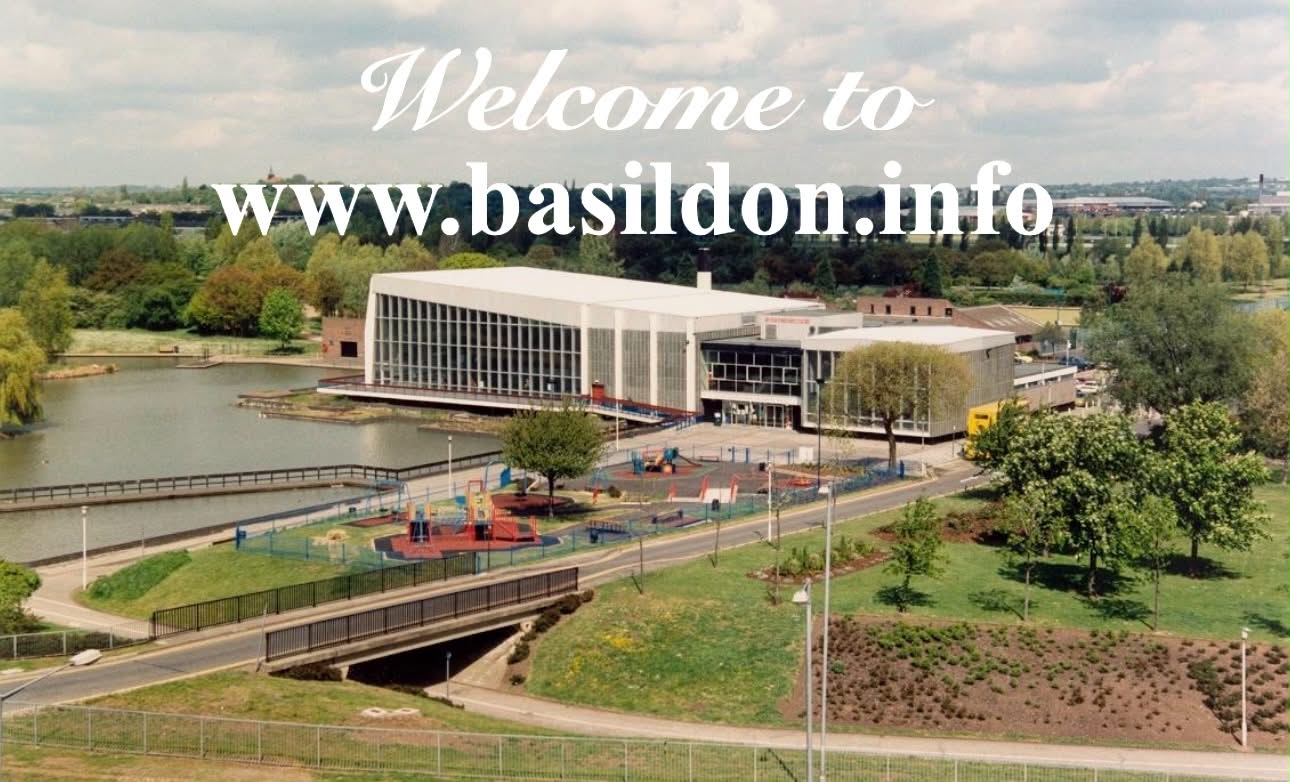
Image © Basildon.com
Introduction
Basildon is a town built on ambition, community, and constant reinvention. When it was designated a New Town on 4th January 1949, the goal was simple but bold: create a modern place where people could live, work, and build better futures beyond the overcrowded streets of post-war London. The designated area covered around 8,800 acres, bringing together long-established villages such as Laindon, Pitsea, Vange, Lee Chapel, Langdon Hills and Nevendon. From there, the Basildon Development Corporation set out to turn a scattered rural landscape into a fully planned town with homes, parks, and space for growing industries.
By 1951, the first families were settling into new houses in Redgrave Road, Vange, marking the beginning of a major housebuilding effort. The early vision included 15 neighbourhoods, each designed to be self-contained and supported by shops, schools, and green spaces. Industry followed quickly. In 1950, the first factory opened on the Nevendon Industrial Estate, setting the tone for Basildon’s growing role as a centre for both manufacturing and employment. Through the 1950s and 60s, the town centre took shape as one of the UK’s first purpose-built pedestrian shopping areas, complete with public art and community facilities that reflected the optimism of the era.
Green spaces have always been central to Basildon’s identity. Gloucester Park, opened in 1957 by the Duke of Gloucester, remains one of the town’s best-loved areas, and today it’s home to everything from walking trails to the modern Sporting Village with its Olympic-size swimming pool. This commitment to balancing urban life with open outdoor space continues across the borough.
Basildon is well connected by road, rail and bus, making it easy to travel around the town and to nearby areas.
By train: Basildon station provides regular c2c services towards London Fenchurch Street and Shoeburyness, while Pitsea and Laindon stations also serve the wider area.
By bus: Basildon Bus Station is an important local transport hub, with services linking the town with places including Laindon, Pitsea, Wickford, Brentwood, Southend, Lakeside and Chelmsford.
By road: The A127 and A13 provide important connections to London, Southend and the wider Essex road network, while local roads connect Basildon's neighbourhoods and surrounding villages.
Whether you're travelling to work, shopping in the town centre or exploring the surrounding area, Basildon has a wide range of transport options to help you get around.
Today, Basildon is a dynamic home to more than 120,000 people. Its town centre continues to evolve through regeneration and new development, while its business parks, leisure facilities and green landscapes reflect the same forward-looking mindset that shaped it in the first place. Basildon’s story is one of growth, resilience and community — a town that has kept moving with the times while staying true to the purpose it was built on.
For a deeper look at everything mentioned in this introduction, please explore the other pages on our website — they’ll give you a clearer, more detailed understanding of Basildon’s history, community, and what’s happening today.
Join us on Facebook! Share your memories, stories and photos of the town here >>> Basildon History Facebook group